Mastering Carbon Fiber Repairs: Essential Techniques for Performance Vehicles
July 26, 2026 · Carbon fiber components are really important, in the performance world. They are very light and very strong which...
Carbon fiber components are really important, in the performance world. They are very light and very strong which makes them perfect for making cars go faster and be more efficient.. When these parts get damaged it is very important to know how to fix them. If you do not fix them correctly it can cause problems with your car on. Whether you are a car enthusiast or a professional knowing how to fix carbon fiber components can save you a lot of time and money.
Recognizing Damage: Signs You Need Repair
Before you start fixing carbon fiber components you need to know when they are damaged. Look for cracks, fraying or delamination. A small crack may not seem like a deal. It can get bigger very quickly if you do not fix it. For example a small crack on the surface of a carbon fiber hood can get bigger because of the stress of driving or even because of temperature changes. Check if the surface is still smooth. If it is rough or uneven that means there is damage underneath.
When you are checking for damage use a light to see. A magnifying glass can help you see cracks that're hard to see. It is also an idea to tap lightly on the surface. If it sounds dull that means there is damage inside. If it sounds clear that means it is still strong. If you see any signs of damage do not wait to check how bad it is. If you wait long it can cost more to fix. It can hurt your cars performance.
Repair Techniques: Getting Hands-On
Once you know you need to fix a carbon fiber component you need to choose the way to fix it. The way you choose will depend on what's wrong with it and how bad it's
Epoxy Resin Repairs
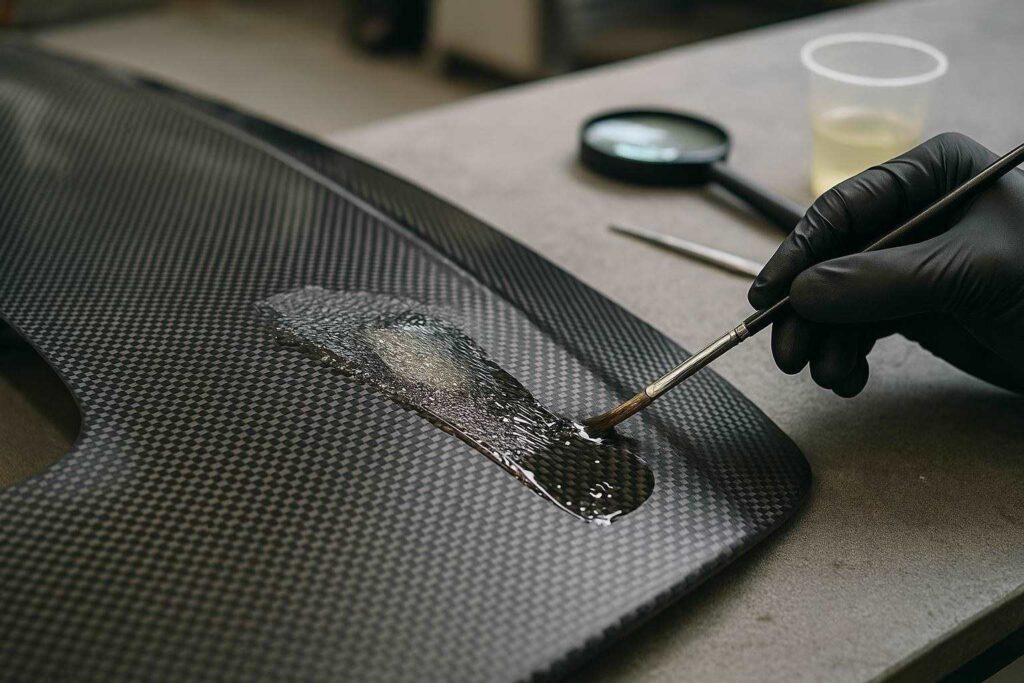
If the damage is small you can use epoxy resin to fix it. First clean the area with a liquid to get rid of any dirt or oil. This will help the resin stick better. Then mix the epoxy according to the instructions. Apply it to the damaged area with a brush or spatula. Make sure it covers the area and does not have any air bubbles. Air bubbles can make the fix weaker. Cause problems later.
Let the epoxy dry completely. This can take a hours or a whole day depending on the type of epoxy you use. The temperature and humidity can also affect how long it takes to dry. Once it is dry use sandpaper to make the surface smooth again. You can also add a coat to protect it and make it look good. A clear coat can help keep the resin from getting damaged by the sun or water.
Vacuum Bagging Techniques
If the damage is bigger you can use a vacuum bag to fix it. This method is often used in the aerospace industry. It also works well for cars. First clean the area. Apply a layer of epoxy resin like before. Then cover it with a film and a layer of peel ply. These help make the surface smooth and stick better. Next put a vacuum bag over it. Suck out the air. This helps the resin spread evenly and stick strongly.
Although this method takes equipment and skill it is often worth it. It can make the carbon fiber component strong again so it looks good and works well.
Cautions: Avoiding Common Pitfalls
When fixing carbon fiber components there are some mistakes you should avoid. One big mistake is rushing the drying process. Epoxy resin needs time to dry correctly. If you rush it the fix can be weak. Always follow the instructions for drying time. Do not try to speed it up by using heat. Heat can change the properties of the resin. Make the fix weaker. Keep the area at a temperature between 70°F and 75°F. Also be careful about the environment. Fixing in an humid area can cause problems so choose a workspace. A clean workspace helps the fix stick better. Keeps you safe from fumes.
Maintenance Tips: Keeping Your Repairs Strong
After you fix your carbon fiber components you need to take care of them. Check them regularly for signs of wear and tear after driving racing. Fix any problems before they get bigger. If you see a chip fix it before it turns into a crack.
When cleaning your carbon fiber components do not use chemicals. They can damage the resin. Instead use soap and water to keep them clean. You can also use a protectant to keep the sun from damaging the surface. If you drive your car hard or race it often you may need to check and fix it often. Small chips or scratches can quickly become problems so fix them away.
Final Thoughts: Knowledge is Power
Knowing how to fix carbon fiber components is very important, for anyone who loves cars. With the knowledge and tools you can make your cars components like new again. Whether you use epoxy resin or a vacuum bag paying attention to details and taking care of them will keep your carbon fiber components working. By being careful and informed you can enjoy the benefits of carbon fiber without worrying about it breaking. Learn about fixing carbon fiber components and your car will thank you.